



Antarctic · From 20 Days
Penguins of the Far South
Falklands, South Georgia and Antarctica
Starts from $31,695 USD
$28,526 USD
-

Adelie penguins
-

Gentoo penguins in Antarctica
-

-

-

-
- Starting from
- Ushuaia, Argentina
- Ships
- Ocean Explorer
- Departures
- 3 Departures between February 2027 to February 2029
From $31,695 USD
$ 28,526 USD
Adelie penguins
Gentoo penguins in Antarctica


Weddell Seal


Expedition Overview
Experience it all on our 20–day Penguins of the Far South: Falklands, South Georgia & Antarctica itinerary. Wander the sandy dunes, rugged seabird cliffs, and the quaint capital of Stanley in the rarely-visited Falklands. In South Georgia, stand amid massive king penguin colonies and uncover the island’s legendary history. Then set foot on the magical 7th Continent, where incredible wildlife, glaciers, icebergs, and snow-clad peaks reveal nature at its most awe-inspiring.
Highlights
See 150,000 pairs of king penguins at St. Andrew’s Bay, the largest rookery on South Georgia
Explore Antarctica with the best expedition in the industry
Wander the quaint British town of Stanley
Follow in the wake of Sir Ernest Shackleton’s perilous voyages to South Georgia
Explore the Antarctic Peninsula by ship, Zodiac, kayak and foot
Enjoy presentations by our onboard polar experts
Enjoy an optional kayaking excursion
Select Your Season & Itinerary
Select Season
Ushuaia, Argentina
20 Days · Ocean Explorer
Starts from $32,866 USD
Ushuaia, Argentina
20 Days · Ocean Explorer
Starts from $45,786 USD
Ushuaia, Argentina
20 Days · Ocean Explorer
Starts from $28,526 USD
Select Itinerary
Ushuaia, Argentina
20 Days · Ocean Explorer
Starts from $32,866 USD
Ushuaia, Argentina
20 Days · Ocean Explorer
Starts from $45,786 USD
Ushuaia, Argentina
20 Days · Ocean Explorer
Starts from $28,526 USD
20 Days – From Ushuaia, Argentina on Ocean Explorer (Season 2026.27)
Day By Day & Map
-
Day 1
Arrive in Ushuaia, Argentina
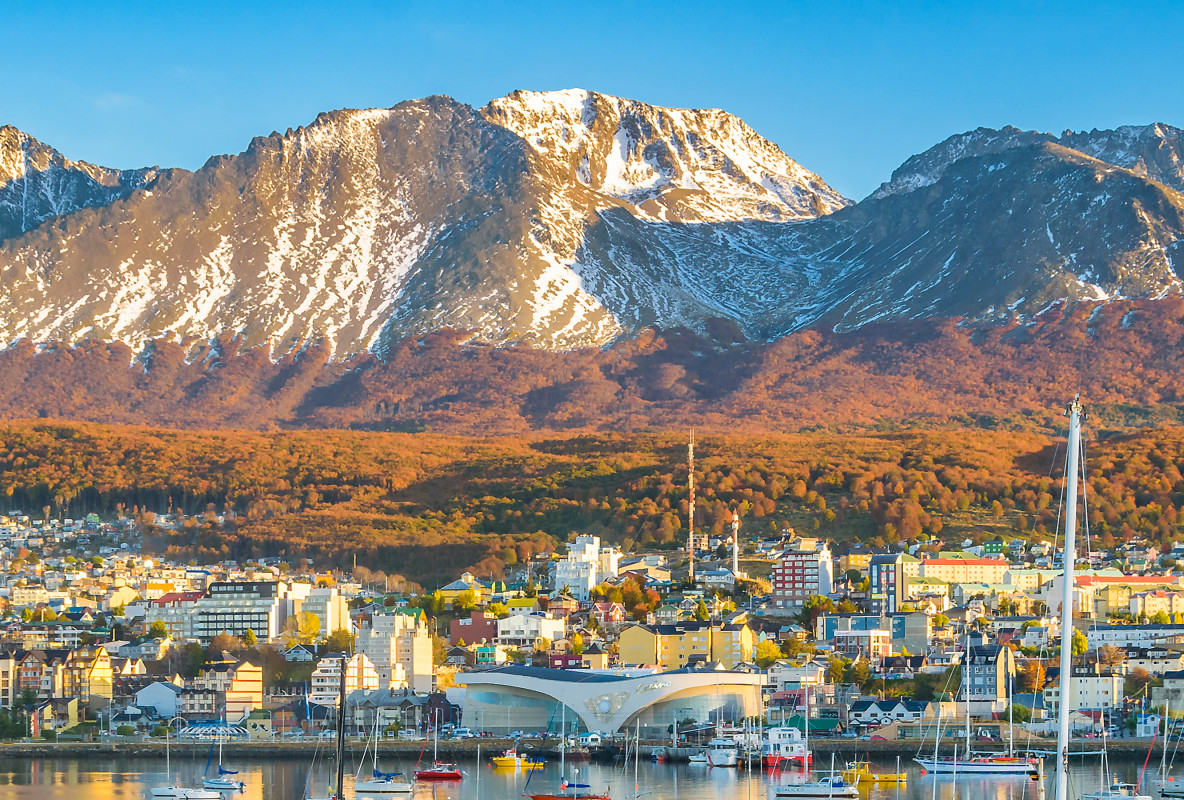
Your gateway for this expedition is Ushuaia, Argentina. Located within the Tierra del Fuego archipelago, Ushuaia has a small-town feel yet boasts many shops, museums, cafés and restaurants that you can enjoy before your voyage. If you’re feeling adventurous, the nearby Tierra del Fuego National Park and Martial Glacier offer plenty of outdoor activities, such as hiking.
-
Day 2
Embark
As you embark, the anticipation grows. Trade your land legs for sea legs, meet and greet your fellow travelers and get acquainted with your ship. Since every Antarctic adventure presents new opportunities and experiences, embarkation day is just as exciting for your Expedition Team as it is for you. On board your team will be there both to ensure your comfort and safety as well as help make your wildlife dreams come true.
-
Day 3
At Sea
Your days at sea are filled with presentations led by your Expedition Team on photography, wildlife, glaciology, and history. In between presentations, spend time on deck looking for wildlife or chatting with your shipmates over a drink at the bar.
-
Day 4 & 5
Falkland Islands (Islas Malvinas)
Upon your arrival in the Falklands (Malvinas), your camera will get its first real workout capturing the abundant wildlife and rugged feel of this sub- Antarctic region. The archipelago contains two main islands, East Falkland and West Falkland, which you will explore during daily excursions.
Stanley, also known as Port Stanley, is often a favored landing site, as the town offers a unique British outpost feel, complete with eclectic charm. You’ll be free to explore, grab a pint at the local pub or visit the cathedral and museum.
In terms of wildlife, the archipelago is home to Magellanic, gentoo and southern rockhopper penguins. If you’re lucky, you may even spot king penguins here as well! You can expect to see black- browed albatross, plus two endemic bird species—the flightless Falkland steamer duck and, possibly, the elusive Cobb’s wren.
Your expert education team will enrich your understanding of the local flora and fauna, making the most out of your time in the Falklands.
-
Day 6 & 7
At Sea
Sailing southeast to South Georgia, you’ll officially enter Antarctic waters once you cross the Antarctic Convergence, an invisible biological boundary encircling the continent. This meeting of oceans, where the cold Antarctic waters mix and mingle with the warmer waters of the Indian, Pacific and Atlantic Oceans, helps nourish the abundance of krill that attracts whales, seals, and birdlife to this part of the world. Your Expedition Team will notify you when you cross this invisible yet important line, and also look out for the seabirds and marine life that frequent this nutrient-rich area.
-
Day 8 to 11
South Georgia
This remote, mountainous island was a popular stop for many historic Antarctic expeditions and was once known for whale– and seal–hunting. Today, island wildlife populations are rebounding, but you’ll still see remnants of old whaling stations and other abandoned outposts.
One significant and historic site is the grave of the great explorer Sir Ernest Shackleton. You can visit his grave at the settlement of Grytviken, which is also home to an old whaling station, plus a museum, gift shop, church and small research station.
Although South Georgia’s history is an important attraction to the island, its incredible densities of wildlife make it truly memorable. Each landing you make on South Georgia, often referred to as the Galapagos of the Southern Sea, will open your eyes to the wondrous lives of new, enthralling creatures.
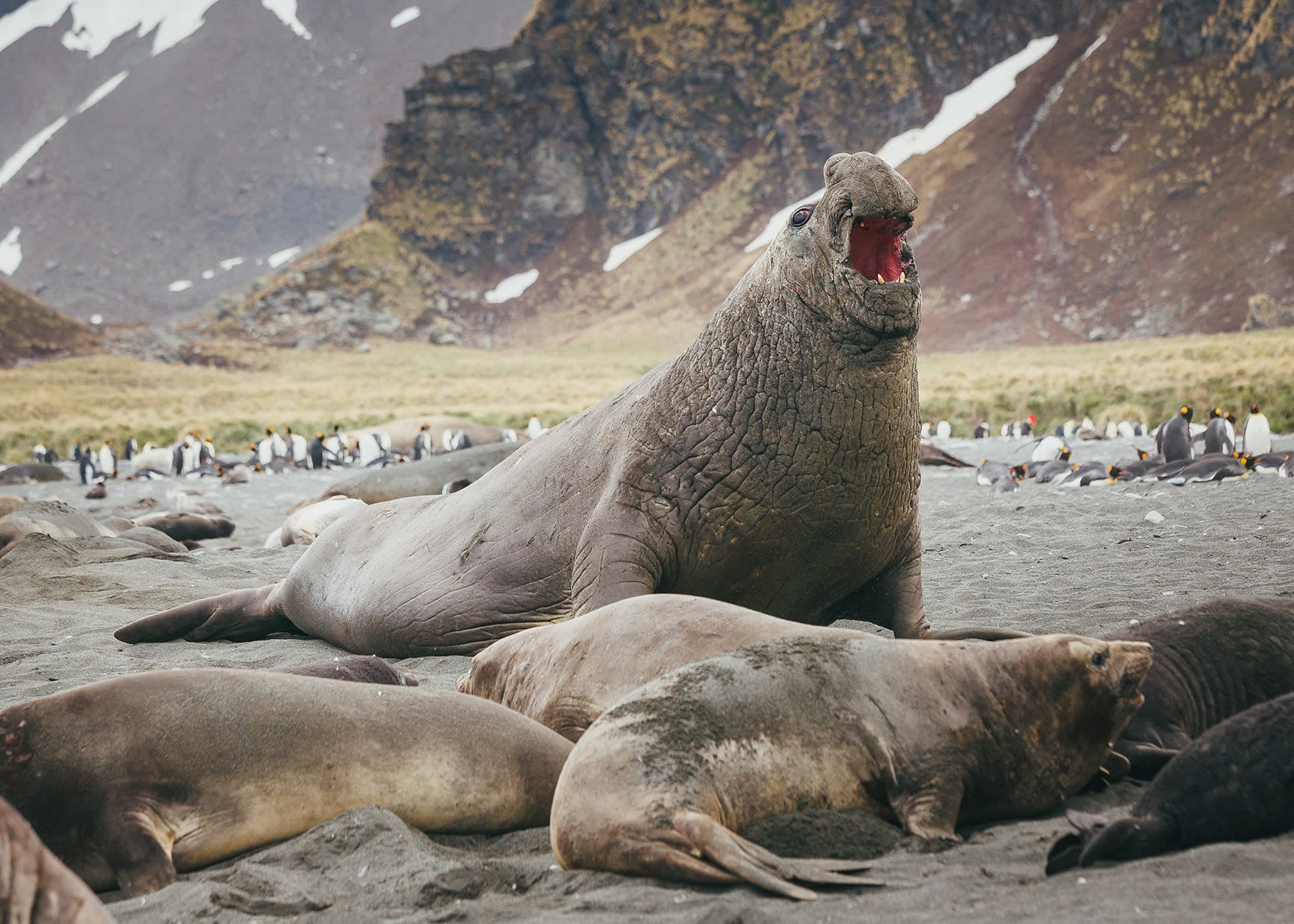
One day you may see colonies with hundreds of thousands of pairs of king penguins waddling on shore, and the next, you may visit another beach inhabited by hundreds of fur or elephant seals. The grasses, mountains and beaches of South Georgia all play an important role in the breeding and survival of different species on the island. This fragile and interwoven relationship is something your Expedition Team will instill in you during your time here.
-
Day 12 & 13
At Sea
Say goodbye to the king penguins as you leave for your next destination: Antarctica! Your days at sea are filled with presentations, workshops, and social activities led by your Expedition Team.
If conditions allow, we may attempt landfall on the South Orkney Islands, our first official stop in Antarctica.
-
Day 14 to 17
South Shetland Islands and Antarctic Peninsula
The most common reaction upon reaching the Antarctic Continent is a sense of reverence and awe. The experience is beyond words, since few places are as untouched and enduring as Antarctica.
You will discover that Antarctica is a land of extremes. At one moment you’ll be overcome with a feeling of complete isolation and silence, and at the next moment you’ll be inspired by nature as a calving glacier crashes into a brilliant blue sea or a curious penguin waddles by to observe the human.
Your Expedition Team will take care of you at each excursion, whether you are Zodiac cruising, visiting a historical site or consorting with penguin colonies.
Chinstrap, Adélie and gentoo penguins are found here, along with Weddell, fur, crabeater and leopard seals. During Zodiac cruises, keep an eye out for Antarctic whales such as minkes, as you may get a chance for an intimate experience with these majestic animals. Each day and each excursion will present a new collection of creatures to entertain you and keep your camera busy.
As exciting as the Zodiac excursions and landings are, perhaps you’ll treat yourself to an extra-special Antarctic experience by partaking in an optional paddling excursion (at an extra cost) or cast reason aside and jump into Antarctic waters for the Polar Plunge!
-
Day 18 & 19
Crossing the Drake Passage
After more than two weeks of endless wildlife encounters, your journey home begins. Crossing the Drake is your unofficial rite of passage, completing your Antarctic adventure. Enjoy your final moments celebrating with your fellow shipmates and savor the silence of the sea as long as you can.
-
Day 20
Disembarkation in Ushuaia
After breakfast aboard the ship, it is time to part ways and say goodbye to your Expedition Team. Airport transfers will be provided for those departing on the first homeward flights. Other guests will be transferred to town.

What’s Included & Excluded
- An official Quark Expeditions parka to keep
- Leadership throughout the voyage by our experienced Expedition Team, including shore landings and other activities
- All Zodiac transfers and cruising as per the daily program
- All shore landings as per the daily program
- Shipboard accommodation with daily housekeeping
- All meals, snacks, soft drinks and juices on board throughout your voyage. Please inform us of any dietary requirements as far in advance as possible. Unfortunately, the ships’ galleys cannot prepare kosher meals.
- Free beer, standard wines, spirits, and cocktails during bar service hours and dinner
- Complimentary coffee, tea and cocoa available around the clock
- Formal and informal presentations by our Expedition Team and guest speakers as scheduled
- A photographic journal documenting your expedition
- A pair of waterproof expedition boots on loan for landings and Zodiac cruising excursions
- Hair dryer and bathrobes in every cabin
- Complimentary Wi-Fi service on one device permitting basic Internet browsing, email, posting on social media and voice applications. (Premium packages are available for more data-intensive applications.)
- All miscellaneous service taxes and port charges throughout the program
- All luggage handling aboard the ship
- Group arrival transfer in Ushuaia from airport to pre expedition hotel on Day 1
- One night’s pre-expedition hotel accommodation in Ushuaia with breakfast. (Note: The number of guests per room is the same as cabin occupancy on the ship. Due to limited availability, travelers who reserve a suite on board are accommodated in standard rooms at the hotel. Triple rooms may not be available.)
- Group transfer from hotel to ship on embarkation day
- Group departure transfer upon disembarkation in Ushuaia from ship to local airport or to luggage storage facility
- International airfare
- Passport and applicable visa expenses
- Government arrival and departure taxes not mentioned
- Meals unless otherwise specified
- Baggage, cancellation, interruption and medical travel insurance—strongly recommended
- Excess-baggage fees on international and domestic flights
- Mandatory waterproof pants for Zodiac landing and cruising excursions, or any other gear not mentioned
- Laundry, bar, spa services and other personal charges, unless specified
- Phone charges may vary by location
- Our basic complimentary Wi-Fi service does not include Premium packages which enable more data-intensive applications
- Voluntary gratuity at the end of the voyage for expedition staff and shipboard crew
- Additional overnight accommodation
- Arrival and departure transfers, except where explicitly stated
- Adventure Options not listed in Included Activities
20 Days – From Ushuaia, Argentina on Ocean Explorer (Season 2026.27)
20 Days – From Ushuaia, Argentina on Ocean Explorer (Season 2026.27)
-
Day 1
Arrive in Ushuaia, Argentina
Your gateway for this expedition is Ushuaia, Argentina. Located within the Tierra del Fuego archipelago, Ushuaia has a small-town feel yet boasts many shops, museums, cafés and restaurants that you can enjoy before your voyage. If you’re feeling adventurous, the nearby Tierra del Fuego National Park and Martial Glacier offer plenty of outdoor activities, such as hiking.
-
Day 2
Embark
As you embark, the anticipation grows. Trade your land legs for sea legs, meet and greet your fellow travelers and get acquainted with your ship. Since every Antarctic adventure presents new opportunities and experiences, embarkation day is just as exciting for your Expedition Team as it is for you. On board your team will be there both to ensure your comfort and safety as well as help make your wildlife dreams come true.
-
Day 3
At Sea
Your days at sea are filled with presentations led by your Expedition Team on photography, wildlife, glaciology, and history. In between presentations, spend time on deck looking for wildlife or chatting with your shipmates over a drink at the bar.
-
Day 4 & 5
Falkland Islands (Islas Malvinas)
Upon your arrival in the Falklands (Malvinas), your camera will get its first real workout capturing the abundant wildlife and rugged feel of this sub- Antarctic region. The archipelago contains two main islands, East Falkland and West Falkland, which you will explore during daily excursions.
Stanley, also known as Port Stanley, is often a favored landing site, as the town offers a unique British outpost feel, complete with eclectic charm. You’ll be free to explore, grab a pint at the local pub or visit the cathedral and museum.
In terms of wildlife, the archipelago is home to Magellanic, gentoo and southern rockhopper penguins. If you’re lucky, you may even spot king penguins here as well! You can expect to see black- browed albatross, plus two endemic bird species—the flightless Falkland steamer duck and, possibly, the elusive Cobb’s wren.
Your expert education team will enrich your understanding of the local flora and fauna, making the most out of your time in the Falklands.
-
Day 6 & 7
At Sea
Sailing southeast to South Georgia, you’ll officially enter Antarctic waters once you cross the Antarctic Convergence, an invisible biological boundary encircling the continent. This meeting of oceans, where the cold Antarctic waters mix and mingle with the warmer waters of the Indian, Pacific and Atlantic Oceans, helps nourish the abundance of krill that attracts whales, seals, and birdlife to this part of the world. Your Expedition Team will notify you when you cross this invisible yet important line, and also look out for the seabirds and marine life that frequent this nutrient-rich area.
-
Day 8 to 11
South Georgia
This remote, mountainous island was a popular stop for many historic Antarctic expeditions and was once known for whale– and seal–hunting. Today, island wildlife populations are rebounding, but you’ll still see remnants of old whaling stations and other abandoned outposts.
One significant and historic site is the grave of the great explorer Sir Ernest Shackleton. You can visit his grave at the settlement of Grytviken, which is also home to an old whaling station, plus a museum, gift shop, church and small research station.
Although South Georgia’s history is an important attraction to the island, its incredible densities of wildlife make it truly memorable. Each landing you make on South Georgia, often referred to as the Galapagos of the Southern Sea, will open your eyes to the wondrous lives of new, enthralling creatures.
One day you may see colonies with hundreds of thousands of pairs of king penguins waddling on shore, and the next, you may visit another beach inhabited by hundreds of fur or elephant seals. The grasses, mountains and beaches of South Georgia all play an important role in the breeding and survival of different species on the island. This fragile and interwoven relationship is something your Expedition Team will instill in you during your time here.
-
Day 12 & 13
At Sea
Say goodbye to the king penguins as you leave for your next destination: Antarctica! Your days at sea are filled with presentations, workshops, and social activities led by your Expedition Team.
If conditions allow, we may attempt landfall on the South Orkney Islands, our first official stop in Antarctica.
-
Day 14 to 17
South Shetland Islands and Antarctic Peninsula
The most common reaction upon reaching the Antarctic Continent is a sense of reverence and awe. The experience is beyond words, since few places are as untouched and enduring as Antarctica.
You will discover that Antarctica is a land of extremes. At one moment you’ll be overcome with a feeling of complete isolation and silence, and at the next moment you’ll be inspired by nature as a calving glacier crashes into a brilliant blue sea or a curious penguin waddles by to observe the human.
Your Expedition Team will take care of you at each excursion, whether you are Zodiac cruising, visiting a historical site or consorting with penguin colonies.
Chinstrap, Adélie and gentoo penguins are found here, along with Weddell, fur, crabeater and leopard seals. During Zodiac cruises, keep an eye out for Antarctic whales such as minkes, as you may get a chance for an intimate experience with these majestic animals. Each day and each excursion will present a new collection of creatures to entertain you and keep your camera busy.
As exciting as the Zodiac excursions and landings are, perhaps you’ll treat yourself to an extra-special Antarctic experience by partaking in an optional paddling excursion (at an extra cost) or cast reason aside and jump into Antarctic waters for the Polar Plunge!
-
Day 18 & 19
Crossing the Drake Passage
After more than two weeks of endless wildlife encounters, your journey home begins. Crossing the Drake is your unofficial rite of passage, completing your Antarctic adventure. Enjoy your final moments celebrating with your fellow shipmates and savor the silence of the sea as long as you can.
-
Day 20
Disembarkation in Ushuaia
After breakfast aboard the ship, it is time to part ways and say goodbye to your Expedition Team. Airport transfers will be provided for those departing on the first homeward flights. Other guests will be transferred to town.
20 Days – From Ushuaia, Argentina on Ocean Explorer (Season 2026.27)
Day By Day & Map
-
Day 1
Arrive in Ushuaia, Argentina
You may arrive in Ushuaia at any time on Day 1. This southernmost city of South America is known for its beautiful mountainous surroundings, so we encourage you to consider arriving a day or two before your expedition. We will arrange for a transfer from the airport to your hotel, both of which are included in the cost of your trip. An optional pre-departure briefing will be held in the lobby of your hotel at 6 pm.
-
Day 2
Embarkation in Ushuaia
Your luggage will be collected from the lobby of your hotel in the morning and transferred to the ship. Ship embarkation is usually around 4 pm. Guests will meet at a designated location near the pier, and board the buses for transfer to the ship. Information about embarkation will be posted in your Ushuaia hotel and discussed during your optional pre-departure briefing on Day 1.
-
Day 3
At Sea
Your days at sea are filled with presentations led by your Expedition Team on photography, wildlife, glaciology, and history. In between presentations, spend time on deck looking for wildlife or chatting with your shipmates over a drink at the bar.
-
Day 4 & 5
Falkland Islands (Islas Malvinas)
Upon your arrival in the Falklands (Malvinas), your camera will get its first real workout capturing the abundant wildlife and rugged feel of this subAntarctic region. The archipelago contains two main islands, East Falkland and West Falkland, which you will explore during daily excursions. Stanley, also known as Port Stanley, is often a favored landing site, as the town offers a unique British outpost feel, complete with eclectic charm. You’ll be free to explore, grab a pint at the local pub or visit the cathedral and museum. In terms of wildlife, the archipelago is home to Magellanic, gentoo and southern rockhopper penguins. If you’re lucky, you may even spot king penguins here as well. You can expect to see blackbrowed albatross, plus two endemic bird species—the flightless Falkland steamer duck and, possibly, the elusive Cobb’s wren. Your expert education team will enrich your understanding of the local flora and fauna, making the most out of your time in the Falklands.
-
Day 6 & 7
At Sea
Sailing southeast to South Georgia, you’ll officially enter Antarctic waters once you cross the Antarctic Convergence, an invisible biological boundary encircling the continent. This meeting of oceans, where the cold Antarctic waters mix and mingle with the warmer waters of the Indian, Pacific and Atlantic Oceans, helps nourish the abundance of krill that attracts whales, seals, and birdlife to this part of the world. Your Expedition Team will notify you when you cross this invisible yet important line, and also look out for the seabirds and marine life that frequent this nutrient-rich area.
-
Day 8 to 11
South Georgia
This remote, mountainous island was a popular stop for many historic Antarctic expeditions and was once known for whale– and seal–hunting. Today, island wildlife populations are rebounding, but you’ll still see remnants of old whaling stations and other abandoned outposts. One significant and historic site is the grave of the great explorer Sir Ernest Shackleton. You can visit his grave at the settlement of Grytviken, which is also home to an old whaling station, plus a museum, gift shop, church and small research station. Although South Georgia’s history is an important attraction to the island, its incredible densities of wildlife make it truly memorable. Each landing you make on South Georgia, often referred to as the Galapagos of the Southern Sea, will open your eyes to the wondrous lives of new, enthralling creatures. One day you may see colonies with hundreds of thousands of pairs of king penguins waddling on shore, and the next, you may visit another beach inhabited by hundreds of fur or elephant seals. The grasses, mountains and beaches of South Georgia all play an important role in the breeding and survival of different species on the island. This fragile and interwoven relationship is something your Expedition Team will instill in you during your time here.
-
Day 12 & 13
At Sea
Say goodbye to the king penguins as you leave for your next destination: Antarctica. Your days at sea are filled with presentations, workshops, and social activities led by your Expedition Team. If conditions allow, we may attempt landfall on the South Orkney Islands, our first official stop in Antarctica.
-
Day 14 to 17
South Shetland Islands and Antarctic Peninsula
The most common reaction upon reaching the Antarctic Continent is a sense of reverence and awe. The experience is beyond words, since few places are as untouched and enduring as Antarctica. You will discover that Antarctica is a land of extremes. At one moment you’ll be overcome with a feeling of complete isolation and silence, and at the next moment you’ll be inspired by nature as a calving glacier crashes into a brilliant blue sea or a curious penguin waddles by to observe the human. Your Expedition Team will take care of you at each excursion, whether you are Zodiac cruising, visiting a historical site or consorting with penguin colonies. Chinstrap, Adélie and gentoo penguins are found here, along with Weddell, fur, crabeater and leopard seals. During Zodiac cruises, keep an eye out for Antarctic whales such as minkes, as you may get a chance for an intimate experience with these majestic animals. Each day and each excursion will present a new collection of creatures to entertain you and keep your camera busy. As exciting as the Zodiac excursions and landings are, perhaps you’ll treat yourself to an extra-special Antarctic experience by partaking in an optional paddling excursion (at an extra cost) or cast reason aside and jump into Antarctic waters for the Polar Plunge.
-
Day 18 & 19
Crossing the Drake Passage
After more than two weeks of endless wildlife sightings, your journey home begins. Crossing the Drake is your unofficial rite of passage, completing your Antarctic adventure. Enjoy your final moments celebrating with your fellow shipmates and savor the silence of the sea as long as you can.
-
Day 20
Disembark in Ushuaia
Your ship is scheduled to arrive in Ushuaia between 7 a.m. and 8 a.m. Once the ship has docked, you will bid farewell to your Expedition Team and shipmates before completing your disembarkation. You are then free to continue your onward journey.

What’s Included & Excluded
- An official Quark Expeditions parka to keep
- Leadership throughout the voyage by our experienced Expedition Team, including shore landings and other activities
- All Zodiac transfers and cruising as per the daily program
- All shore landings as per the daily program
- Shipboard accommodation with daily housekeeping
- All meals, snacks, soft drinks and juices on board throughout your voyage.
- Complimentary select beer, wines and cocktails during bar service hours and dinner
- Complimentary coffee, tea and cocoa available around the clock
- Formal and informal presentations by our Expedition Team and guest speakers as scheduled
- A photographic journal documenting your expedition
- A pair of waterproof expedition boots on loan for landings and Zodiac cruising excursions
- Hair dryer and bathrobes in every cabin
- Complimentary Wi-Fi service on one device permitting basic Internet browsing, email, posting on social media and voice applications. (Premium packages are available for more data-intensive applications.) Note: Internet access in the polar regions is subject to geography, climate, and other factors beyond our control.
- All miscellaneous service taxes and port charges throughout the program
- All luggage handling aboard the ship
- Group arrival transfer in Ushuaia from airport to pre-expedition hotel on Day 1
- One night’s pre-expedition hotel accommodation in Ushuaia with breakfast. (Note: The number of guests per room is the same as cabin occupancy on the ship. Due to limited availability, travelers who reserve a suite on board are accommodated in standard rooms at the hotel. Triple rooms may not be available.)
- Group transfer from hotel to ship on embarkation day
- Group departure transfer upon disembarkation in Ushuaia from ship to local airport or to luggage.
- International airfare
- Passport and applicable visa expenses
- Government arrival and departure taxes not mentioned
- Baggage, cancellation, interruption and medical travel insurance—strongly recommended
- Excess-baggage fees on international and domestic flights
- Mandatory waterproof pants for Zodiac landing and cruising excursions, or any other gear not mentioned
- Laundry, bar, spa services and other personal charges, unless specified
- Phone charges may vary by location
- Our basic complimentary Wi-Fi service does not include Premium packages which enable more data-intensive applications
- Voluntary gratuity at the end of the voyage for expedition staff and shipboard crew
- Additional overnight accommodation
- Arrival and departure transfers, except where explicitly stated
- Adventure Options not listed in Included Activities.
20 Days – From Ushuaia, Argentina on Ocean Explorer (Season 2026.27)
20 Days – From Ushuaia, Argentina on Ocean Explorer (Season 2026.27)
-
Day 1
Arrive in Ushuaia, Argentina
You may arrive in Ushuaia at any time on Day 1. This southernmost city of South America is known for its beautiful mountainous surroundings, so we encourage you to consider arriving a day or two before your expedition. We will arrange for a transfer from the airport to your hotel, both of which are included in the cost of your trip. An optional pre-departure briefing will be held in the lobby of your hotel at 6 pm.
-
Day 2
Embarkation in Ushuaia
Your luggage will be collected from the lobby of your hotel in the morning and transferred to the ship. Ship embarkation is usually around 4 pm. Guests will meet at a designated location near the pier, and board the buses for transfer to the ship. Information about embarkation will be posted in your Ushuaia hotel and discussed during your optional pre-departure briefing on Day 1.
-
Day 3
At Sea
Your days at sea are filled with presentations led by your Expedition Team on photography, wildlife, glaciology, and history. In between presentations, spend time on deck looking for wildlife or chatting with your shipmates over a drink at the bar.
-
Day 4 & 5
Falkland Islands (Islas Malvinas)
Upon your arrival in the Falklands (Malvinas), your camera will get its first real workout capturing the abundant wildlife and rugged feel of this subAntarctic region. The archipelago contains two main islands, East Falkland and West Falkland, which you will explore during daily excursions. Stanley, also known as Port Stanley, is often a favored landing site, as the town offers a unique British outpost feel, complete with eclectic charm. You’ll be free to explore, grab a pint at the local pub or visit the cathedral and museum. In terms of wildlife, the archipelago is home to Magellanic, gentoo and southern rockhopper penguins. If you’re lucky, you may even spot king penguins here as well. You can expect to see blackbrowed albatross, plus two endemic bird species—the flightless Falkland steamer duck and, possibly, the elusive Cobb’s wren. Your expert education team will enrich your understanding of the local flora and fauna, making the most out of your time in the Falklands.
-
Day 6 & 7
At Sea
Sailing southeast to South Georgia, you’ll officially enter Antarctic waters once you cross the Antarctic Convergence, an invisible biological boundary encircling the continent. This meeting of oceans, where the cold Antarctic waters mix and mingle with the warmer waters of the Indian, Pacific and Atlantic Oceans, helps nourish the abundance of krill that attracts whales, seals, and birdlife to this part of the world. Your Expedition Team will notify you when you cross this invisible yet important line, and also look out for the seabirds and marine life that frequent this nutrient-rich area.
-
Day 8 to 11
South Georgia
This remote, mountainous island was a popular stop for many historic Antarctic expeditions and was once known for whale– and seal–hunting. Today, island wildlife populations are rebounding, but you’ll still see remnants of old whaling stations and other abandoned outposts. One significant and historic site is the grave of the great explorer Sir Ernest Shackleton. You can visit his grave at the settlement of Grytviken, which is also home to an old whaling station, plus a museum, gift shop, church and small research station. Although South Georgia’s history is an important attraction to the island, its incredible densities of wildlife make it truly memorable. Each landing you make on South Georgia, often referred to as the Galapagos of the Southern Sea, will open your eyes to the wondrous lives of new, enthralling creatures. One day you may see colonies with hundreds of thousands of pairs of king penguins waddling on shore, and the next, you may visit another beach inhabited by hundreds of fur or elephant seals. The grasses, mountains and beaches of South Georgia all play an important role in the breeding and survival of different species on the island. This fragile and interwoven relationship is something your Expedition Team will instill in you during your time here.
-
Day 12 & 13
At Sea
Say goodbye to the king penguins as you leave for your next destination: Antarctica. Your days at sea are filled with presentations, workshops, and social activities led by your Expedition Team. If conditions allow, we may attempt landfall on the South Orkney Islands, our first official stop in Antarctica.
-
Day 14 to 17
South Shetland Islands and Antarctic Peninsula
The most common reaction upon reaching the Antarctic Continent is a sense of reverence and awe. The experience is beyond words, since few places are as untouched and enduring as Antarctica. You will discover that Antarctica is a land of extremes. At one moment you’ll be overcome with a feeling of complete isolation and silence, and at the next moment you’ll be inspired by nature as a calving glacier crashes into a brilliant blue sea or a curious penguin waddles by to observe the human. Your Expedition Team will take care of you at each excursion, whether you are Zodiac cruising, visiting a historical site or consorting with penguin colonies. Chinstrap, Adélie and gentoo penguins are found here, along with Weddell, fur, crabeater and leopard seals. During Zodiac cruises, keep an eye out for Antarctic whales such as minkes, as you may get a chance for an intimate experience with these majestic animals. Each day and each excursion will present a new collection of creatures to entertain you and keep your camera busy. As exciting as the Zodiac excursions and landings are, perhaps you’ll treat yourself to an extra-special Antarctic experience by partaking in an optional paddling excursion (at an extra cost) or cast reason aside and jump into Antarctic waters for the Polar Plunge.
-
Day 18 & 19
Crossing the Drake Passage
After more than two weeks of endless wildlife sightings, your journey home begins. Crossing the Drake is your unofficial rite of passage, completing your Antarctic adventure. Enjoy your final moments celebrating with your fellow shipmates and savor the silence of the sea as long as you can.
-
Day 20
Disembark in Ushuaia
Your ship is scheduled to arrive in Ushuaia between 7 a.m. and 8 a.m. Once the ship has docked, you will bid farewell to your Expedition Team and shipmates before completing your disembarkation. You are then free to continue your onward journey.
20 Days – From Ushuaia, Argentina on Ocean Explorer (Season 2026.27)
Day By Day & Map
-
Day 1
Arrival in Ushuaia
You may arrive in Ushuaia at any time on Day 1. This southernmost city of South America is known for its beautiful mountainous surroundings, so we encourage you to consider arriving a day or two before your expedition. We will arrange a transfer from the airport to your hotel, both of which are included in the cost of your trip. An optional pre-departure briefing will be held in the lobby of your hotel at 6 p.m.
-
Day 2
Embarkation in Ushuaia
Your luggage will be collected from the lobby of your hotel in the morning and transferred to the ship. Embarkation is usually around 4 p.m. Guests will meet at a designated location near the pier, and board the buses for transfer to the ship. Information about embarkation will be posted in your Ushuaia hotel and discussed during your optional pre-departure briefing on Day 1.
-
Day 3
At Sea
Your days at sea are filled with presentations led by your Expedition Team on photography, wildlife, glaciology, and history. In between presentations, spend time on deck looking for wildlife or chatting with your shipmates over a drink at the bar.
-
Day 4 & 5
Falkland Islands (Islas Malvinas)
Upon your arrival in the Falklands (Malvinas), your camera will get its first real workout capturing the abundant wildlife and rugged feel of this sub-Antarctic region. The archipelago contains two main islands, East Falkland and West Falkland, which you will explore during daily Zodiac excursions and landings. Stanley, also known as Port Stanley, is a favorite landing site, as the town offers a unique British outpost feel, complete with eclectic charm. You’ll be free to explore, grab a pint at the local pub, or visit the numerous churches and museums. The archipelago is rich in wildlife, especially birds, and home to Magellanic, gentoo and southern rockhopper penguins. If you’re lucky, you may even spot king penguins here, as well. Chances are good that you’ll see black-browed albatross, plus two endemic bird species—the flightless Falkland steamer duck and the elusive Cobb’s wren. Your team of polar experts will enrich your understanding of the local flora and fauna, helping you make the most of your time in the Falklands.
-
Day 6 & 7
At Sea
Sailing southeast to South Georgia, you’ll officially enter Antarctic waters once you cross the Antarctic Convergence, an invisible biological boundary encircling the continent. This meeting of oceans, where the cold Antarctic waters mix with the warmer waters of the Indian, Pacific and Atlantic oceans, helps nourish the abundance of krill that attracts whales, seals, and birdlife to this part of the world. Your Expedition Team will notify you when you cross this invisible yet important line, and will also help you look out for the seabirds and marine life that frequent this nutrient-rich area.
-
Day 8 to 11
South Georgia
After enjoying South Georgia from a distance, we’ll head toward its numerous beaches to find a bay for your first excursion. Landing sites are varied, largely determined by the weather conditions. The sites you visit will provide you with wildlife sightings unrivaled anywhere else on Earth. South Georgia is one of the most fertile breeding grounds in the world for sub-Antarctic wildlife, with beaches blanketed with penguins and seals. It won’t take you long to realize that you are in a birder’s paradise, as burrowing seabirds, albatross and petrels can be seen in abundance. You’ll find that South Georgia, once a popular base for whalers and sealers, is also scattered with abandoned relics and evidence of human activity from centuries gone by. Your Expedition Team will help bring those days to life while you visit old whaling stations and enjoy presentations on the South Georgia of then and now. One of the most significant sites you will visit on the island is Grytviken. This settlement is one of the first whaling stations established in sub-Antarctic waters. Grytviken possesses a special appeal largely because it’s the site of the grave of Sir Ernest Shackleton, one of the most famous Antarctic explorers.
-
Day 12 & 13
At Sea
Say goodbye to the king penguins, as your next destination is Antarctica. Your days at sea are filled with presentations, workshops, and social activities led by your Expedition Team.
-
Day 14 to 17
South Shetland Islands and Antarctic Peninsula
The most common reaction upon reaching the 7th Continent is a sense of reverence and awe. The experience is beyond words, since few places are as untouched as Antarctica. You will begin to appreciate why this region has long captivated the attention of explorers and travelers alike. Every time we visit Antarctica, we witness something new or unexpected, which means your expedition will be unlike any other—creating a unique, personal experience. Each day, you will take Zodiac excursions from the ship to explore glaciated bays, channels and landing sites. Your Expedition Team will take care of you at each landing, whether you are hiking the Antarctic landscape, visiting a research station or observing chinstrap, Adélie and gentoo penguins, all of which can be found here. Keep an eye out for Weddell, fur, crabeater and leopard seals, as well as curious whales, such as humpbacks, minkes, or perhaps orcas while on a Zodiac cruise. Each excursion will present a new array of creatures to fascinate you and keep your camera busy. Amid the serene silence of Antarctica, noisy interludes become indelible memories, such as penguins squabbling over prized pebbles, or the boom and crack of a calving glacier. Every day will be different, having been carefully crafted by your Expedition Team to inspire and educate you about this wonderful part of the world.
-
Day 18 & 19
Crossing the Drake Passage
After more than two weeks of endless wildlife sightings, your journey home begins. Crossing the Drake is your unofficial rite of passage, completing your Antarctic adventure. Enjoy your final moments celebrating with your fellow shipmates and savor the silence of the sea as long as you can.
-
Day 20
Disembark in Ushuaia
Your ship is scheduled to arrive in Ushuaia between 7 a.m. and 8 a.m. Once the ship has docked, you will bid farewell to your Expedition Team and shipmates before completing your disembarkation. You are then free to continue your onward journey

What’s Included & Excluded
- An official Quark Expeditions® parka to keep
- Leadership throughout your voyage by our experienced Expedition Leaders, including shore landings and other activities
- All Zodiac transfers and cruising as per the daily program
- All shore landings as per the daily program
- Shipboard accommodation with daily housekeeping
- All meals, snacks, soft drinks and juices on board throughout your voyage (Please inform us of any dietary requirements as far in advance as possible.)
- Complimentary select beer, wines and cocktails during bar service hours and dinner
- Complimentary coffee, tea and cocoa available around the clock
- Formal and informal presentations by our Expedition Team and guest speakers as scheduled
- A photographic journal documenting the expedition
- A pair of waterproof expedition boots on loan for landings and Zodiac cruising excursions
- Hair dryer and bathrobes in every cabin
- Complimentary Wi-Fi service on one device permitting basic Internet browsing, email, posting on social media and voice applications. (Premium packages are available for more data-intensive applications.) Note: Internet access in the polar regions is subject to geography, climate, and other factors beyond our control
- All miscellaneous service taxes and port charges throughout the program
- All luggage handling aboard the ship
- Group arrival transfer in Ushuaia from airport to pre-expedition hotel on Day 1
- One night’s pre-expedition hotel accommodation in Ushuaia with breakfast. (Note: The number of guests per room is the same as cabin occupancy on the ship. Due to limited availability, travelers who reserve a suite on board are accommodated in standard rooms at the hotel. Triple rooms may not be available.)
- Group transfer from hotel to ship on embarkation day
- Group departure transfer upon disembarkation in Ushuaia from ship to local airport or to luggage.
- Charter Flight & Hotel Package* (when applicable – please review trip-specific details below)
- International airfare
- Arrival and departure transfers
- Passport and visa expenses
- Government arrival and departure taxes not mentioned above
- Meals ashore unless otherwise specified
- Baggage, cancellation, interruption and medical travel insurance—strongly recommended
- Excess-baggage fees on international and domestic flights
- Mandatory waterproof pants for Zodiac cruising, or any other gear not mentioned
- Laundry, bar, spa and other personal charges unless specified
- Phone charges may vary by location
- Voluntary gratuity at the end of the voyage for shipboard staff and crew
- Additional overnight accommodation
- Adventure Options not listed in Included Activities
20 Days – From Ushuaia, Argentina on Ocean Explorer (Season 2026.27)
20 Days – From Ushuaia, Argentina on Ocean Explorer (Season 2026.27)
-
Day 1
Arrival in Ushuaia
You may arrive in Ushuaia at any time on Day 1. This southernmost city of South America is known for its beautiful mountainous surroundings, so we encourage you to consider arriving a day or two before your expedition. We will arrange a transfer from the airport to your hotel, both of which are included in the cost of your trip. An optional pre-departure briefing will be held in the lobby of your hotel at 6 p.m.
-
Day 2
Embarkation in Ushuaia
Your luggage will be collected from the lobby of your hotel in the morning and transferred to the ship. Embarkation is usually around 4 p.m. Guests will meet at a designated location near the pier, and board the buses for transfer to the ship. Information about embarkation will be posted in your Ushuaia hotel and discussed during your optional pre-departure briefing on Day 1.
-
Day 3
At Sea
Your days at sea are filled with presentations led by your Expedition Team on photography, wildlife, glaciology, and history. In between presentations, spend time on deck looking for wildlife or chatting with your shipmates over a drink at the bar.
-
Day 4 & 5
Falkland Islands (Islas Malvinas)
Upon your arrival in the Falklands (Malvinas), your camera will get its first real workout capturing the abundant wildlife and rugged feel of this sub-Antarctic region. The archipelago contains two main islands, East Falkland and West Falkland, which you will explore during daily Zodiac excursions and landings. Stanley, also known as Port Stanley, is a favorite landing site, as the town offers a unique British outpost feel, complete with eclectic charm. You’ll be free to explore, grab a pint at the local pub, or visit the numerous churches and museums. The archipelago is rich in wildlife, especially birds, and home to Magellanic, gentoo and southern rockhopper penguins. If you’re lucky, you may even spot king penguins here, as well. Chances are good that you’ll see black-browed albatross, plus two endemic bird species—the flightless Falkland steamer duck and the elusive Cobb’s wren. Your team of polar experts will enrich your understanding of the local flora and fauna, helping you make the most of your time in the Falklands.
-
Day 6 & 7
At Sea
Sailing southeast to South Georgia, you’ll officially enter Antarctic waters once you cross the Antarctic Convergence, an invisible biological boundary encircling the continent. This meeting of oceans, where the cold Antarctic waters mix with the warmer waters of the Indian, Pacific and Atlantic oceans, helps nourish the abundance of krill that attracts whales, seals, and birdlife to this part of the world. Your Expedition Team will notify you when you cross this invisible yet important line, and will also help you look out for the seabirds and marine life that frequent this nutrient-rich area.
-
Day 8 to 11
South Georgia
After enjoying South Georgia from a distance, we’ll head toward its numerous beaches to find a bay for your first excursion. Landing sites are varied, largely determined by the weather conditions. The sites you visit will provide you with wildlife sightings unrivaled anywhere else on Earth. South Georgia is one of the most fertile breeding grounds in the world for sub-Antarctic wildlife, with beaches blanketed with penguins and seals. It won’t take you long to realize that you are in a birder’s paradise, as burrowing seabirds, albatross and petrels can be seen in abundance. You’ll find that South Georgia, once a popular base for whalers and sealers, is also scattered with abandoned relics and evidence of human activity from centuries gone by. Your Expedition Team will help bring those days to life while you visit old whaling stations and enjoy presentations on the South Georgia of then and now. One of the most significant sites you will visit on the island is Grytviken. This settlement is one of the first whaling stations established in sub-Antarctic waters. Grytviken possesses a special appeal largely because it’s the site of the grave of Sir Ernest Shackleton, one of the most famous Antarctic explorers.
-
Day 12 & 13
At Sea
Say goodbye to the king penguins, as your next destination is Antarctica. Your days at sea are filled with presentations, workshops, and social activities led by your Expedition Team.
-
Day 14 to 17
South Shetland Islands and Antarctic Peninsula
The most common reaction upon reaching the 7th Continent is a sense of reverence and awe. The experience is beyond words, since few places are as untouched as Antarctica. You will begin to appreciate why this region has long captivated the attention of explorers and travelers alike. Every time we visit Antarctica, we witness something new or unexpected, which means your expedition will be unlike any other—creating a unique, personal experience. Each day, you will take Zodiac excursions from the ship to explore glaciated bays, channels and landing sites. Your Expedition Team will take care of you at each landing, whether you are hiking the Antarctic landscape, visiting a research station or observing chinstrap, Adélie and gentoo penguins, all of which can be found here. Keep an eye out for Weddell, fur, crabeater and leopard seals, as well as curious whales, such as humpbacks, minkes, or perhaps orcas while on a Zodiac cruise. Each excursion will present a new array of creatures to fascinate you and keep your camera busy. Amid the serene silence of Antarctica, noisy interludes become indelible memories, such as penguins squabbling over prized pebbles, or the boom and crack of a calving glacier. Every day will be different, having been carefully crafted by your Expedition Team to inspire and educate you about this wonderful part of the world.
-
Day 18 & 19
Crossing the Drake Passage
After more than two weeks of endless wildlife sightings, your journey home begins. Crossing the Drake is your unofficial rite of passage, completing your Antarctic adventure. Enjoy your final moments celebrating with your fellow shipmates and savor the silence of the sea as long as you can.
-
Day 20
Disembark in Ushuaia
Your ship is scheduled to arrive in Ushuaia between 7 a.m. and 8 a.m. Once the ship has docked, you will bid farewell to your Expedition Team and shipmates before completing your disembarkation. You are then free to continue your onward journey
Explore Activities and Extensions
Activities vary by itinerary, ship, destination and are subject to weather conditions. Checkout our Itineraries to explore what’s included in each voyage.


Expedition Ships











Possible Excursions
When traveling in extremely remote regions, your Expedition Team must consider the sea, ice and weather to guide the route and itinerary details. The following sites are a sample of what you may experience on your expedition, whether by ship, Zodiac cruise, helicopter, or shore landing.
South Shetland Islands
Snow Hill Island
Falkland Islands (Islas Malvinas)

Antarctic Peninsula

South Georgia
South Shetland Islands
-
Aitcho Islands
This group of small islands, some still unnamed, is situated in the northern entrance of the English Strait. You can often spot a great mix of wildlife in the area, with gentoo and chinstrap penguins having established rookeries on the islands. Southern elephant and fur seals frequently haul out here, too.
-
Deception Island
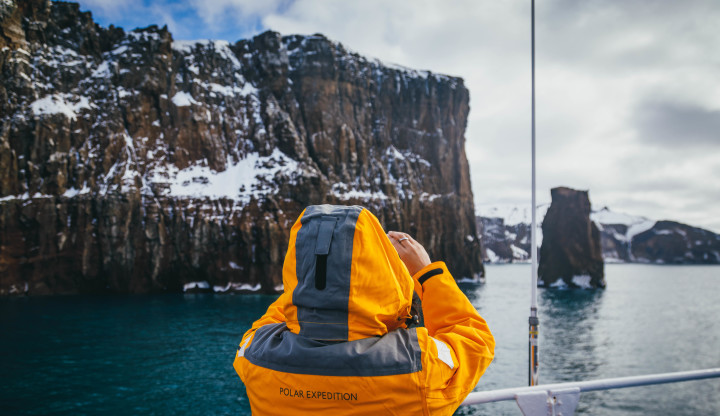
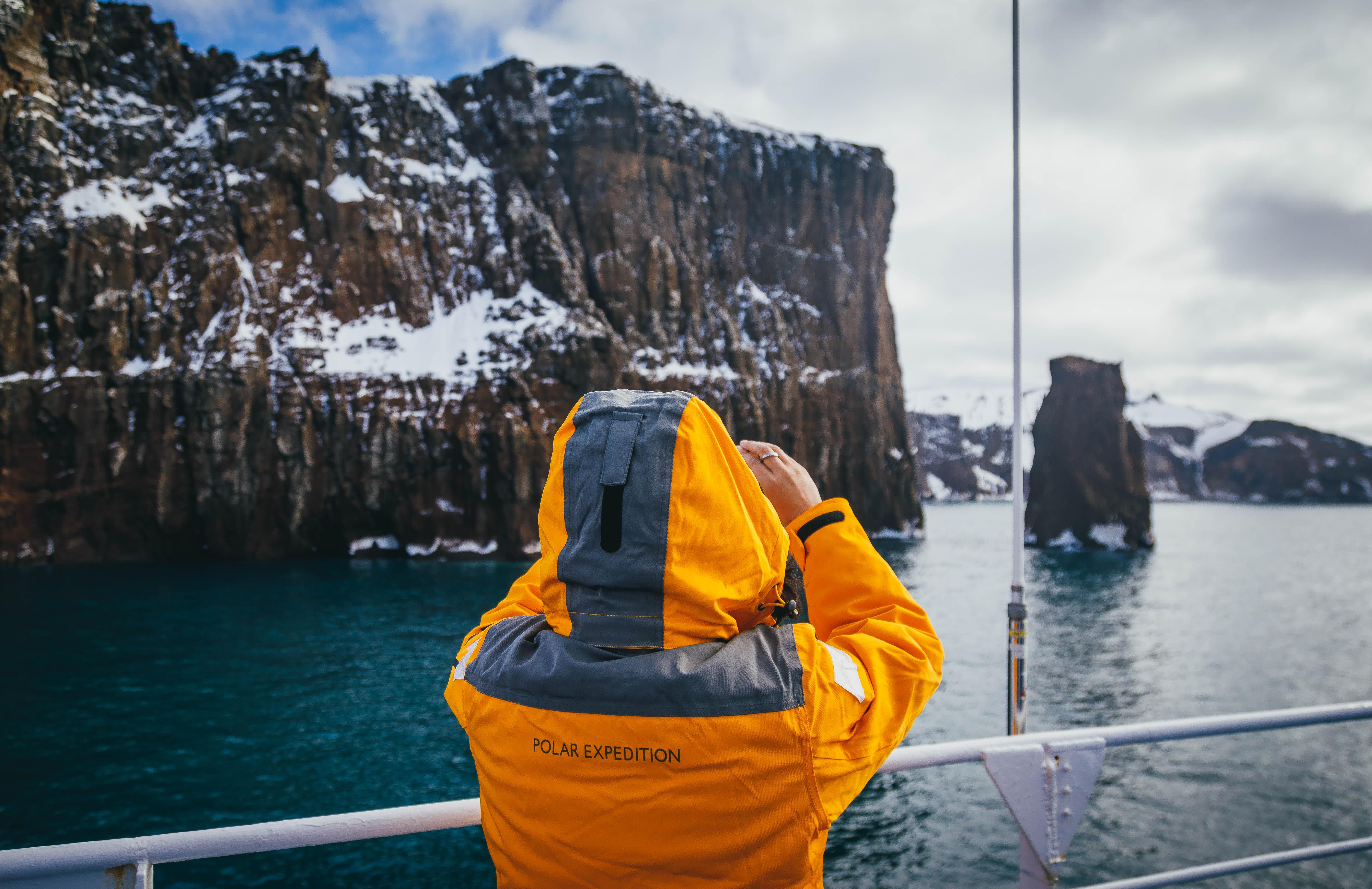
Deception Island is a flooded circular caldera formed by the collapse of an active volcano. To reach this protected harbor, it is necessary to sail through a narrow passage called Neptune’s Bellows. Inside are several bays used at various times for whaling and scientific research. Along with waddling penguins and lounging seals, you’ll see the rusting remains of whaling operations on the beach in some locations. The landscape of Deception Island often presents opportunities for longer walks to striking vistas. The stark contrast between snow and dark volcanic sand and the steam along the shoreline from geothermic activity when the tide is right, gives this location an atmospheric feel.
-
Half Moon Island
This crescent-shaped island was known to sealers as early as 1821. While they tried to keep this productive location secret, we’re happy to bring you ashore on this impressive island. Many Antarctic birds breed here, including chinstrap penguins, shags, Wilson’s storm petrels, kelp gulls, snowy sheathbills, Antarctic terns and skuas.
-
Hannah Point
On the southern coast of Livingston Island at Hannah Point, you may see chinstrap and gentoo penguin rookeries, along with the occasional breeding macaroni penguin. Due to the rather congested area available to the nesting penguins, we are able to visit here only after January 10.
-
Penguin Island
Antarctica has two flowering plants, both of which you can find on Penguin Island: Antarctic hair grass (Deschampsia antarctica) and Antarctic pearlwort (Colobanthus quitensis). Chinstrap penguins, fur seals and southern elephant seals can also be spotted here.
-
Robert Point
A beautiful spot for Zodiac cruising, this point was known to sealers as early as 1820. Chinstrap penguins, kelp gulls and pintado petrels breed here, and whales may be seen in the surrounding waters.
-
Turret Point
Chinstrap and Adélie penguin rookeries are found on this point, situated on the south coast of King George Island. The beaches here are often crowded with southern elephant, fur and Weddell seals hauled out on the rocks.
-
Yankee Harbour
Gentoo penguins have established a rookery at this harbor, situated on the southwest side of Greenwich Island. Here, you can see an abandoned Argentine refuge hut and a large glacier that stretches along the east and north sides of the bay. An abandoned sealing try pot is all that remains of the activity that brought men thousands of miles in tall ships to seek their fortune. Enjoy a rare chance for a longer walk along the expansive beach, dotted with historical artifacts and wildlife.
Snow Hill Island
-
Brown Bluff
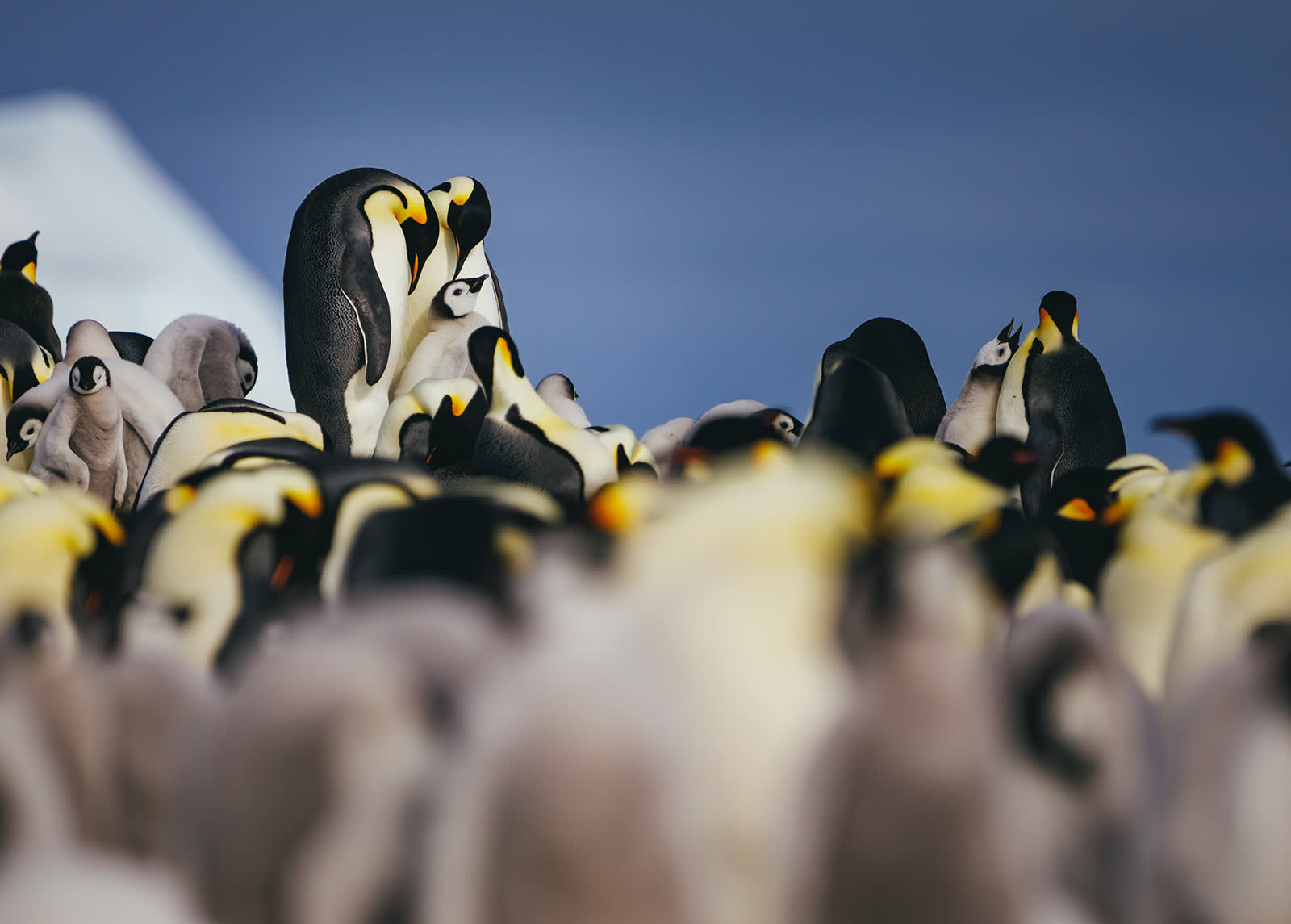
A dormant volcano, Brown Bluff towers 2,225 feet (678 meters) over the rookeries of Adélie and gentoo penguins, which number in the thousands. These penguins will create a symphony of background noise while you explore the bluff.
-
Hope Bay
Three members of the Swedish Antarctic Expedition (1901-04) spent the winter in a hut on the shores of the bay. The hut is located close to the jetty of Esperanza Station, an Argentine research station and one of only two civilian bases in Antarctica outfitted with a school and chapel.
-
Paulet Island
Located in the northwestern Weddell Sea, Paulet Island is home to a large Adélie penguin rookery. With a volcanic cone that rises 1,158 feet (353 meters), the island reminds you that this was once a very active landscape. In addition to penguins, you may be interested in visiting the remains of a historic hut built by members of the Swedish Antarctic Expedition of 1901-04. A cross marks the grave site of Ole Wennersgaard, a member of the crew.
Falkland Islands (Islas Malvinas)
-
Carcass Island
This five-mile (8 km) island northwest of West Falkland is owned by Rob and Lorraine McGill. Named for the Royal Navy ship HMS Carcass, which arrived in 1766, it is a picturesque place, where songbirds nest amongst the luxuriant growth that covers the gently rolling landscape.
-
Saunders Island
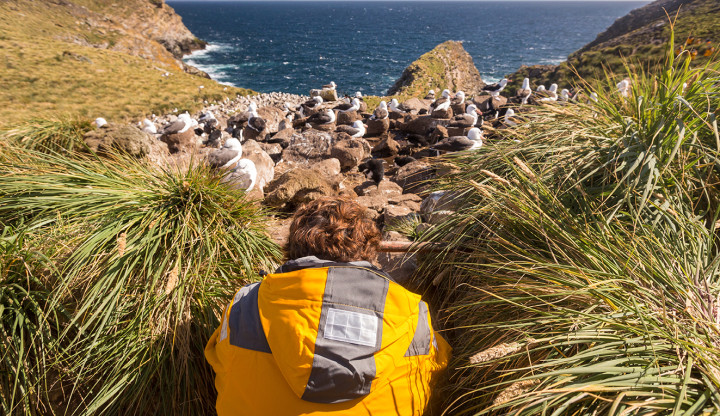
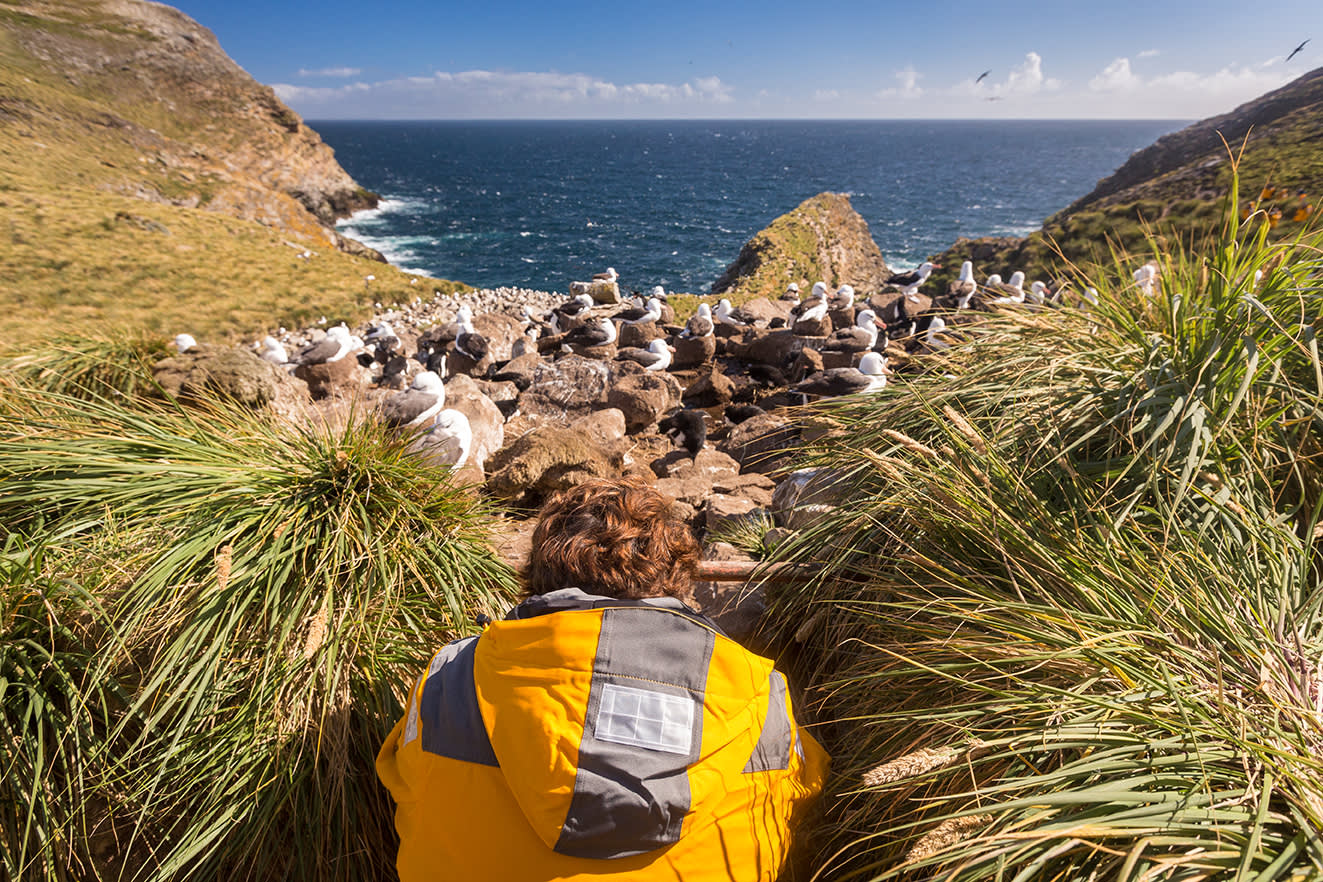
Saunders Island is the fourth largest island in the Falklands and has been designated an Important Bird Area due to the high density of nesting seabirds. Nesting species on the island include rockhopper, gentoo and king penguins as well as black-browed albatross and king cormorants, among many others. Keep on the lookout for Commerson’s dolphins by the shore, and for whale blows out at sea.
-
Stanley
Stanley’s deep-water harbor has been the economic mainstay of the community since the port’s completion in 1845. Carrying fortune seekers from the west coast of the Americas, ships battered by rough waters near Cape Horn often called in at Stanley as well. Take a stroll through this quaint English town, visiting the cathedral, museum, or one of its many pubs.
-
West Point Island
The Napier family has owned West Point Island since the 1860s. On the island’s west coast, thousands of black-browed albatross nest in colonies on cliffs along the water’s edge. Rockhopper penguins share the cliffs, while Commerson’s dolphins can often be seen in the surrounding waters.
Antarctic Peninsula

-
Cierva Cove
If one of your expedition goals is to witness incredible icebergs and sea ice, Cierva Cove is the place for you. A massive glacial face regularly calves into the bay, and the floating ice can be quite spectacular. Seals can be spotted on ice floes, and later in the season, humpback whales occasionally feed in the icy waters.
-
Damoy Point
Damoy Point is the site of a historical ice runway used by the British Antarctic Survey for their flights further south since 1975. The well-maintained hut was used as a staging-post to store supplies and for accommodation while awaiting ideal flying conditions. The point is also home to a penguin rookery and allows for spectacular views of the mountains of Anvers Island.
-
Danco Island
Home to gentoo penguins, this small dome-shaped island provides you with a stunning view of the Errera Channel.
-
Enterprise Island
Located in Wilhelmina Bay, this island’s protected coves were once used by whalers. A Zodiac cruise exploring the island passes the rusting remains of a wrecked whaling ship, and provides opportunities to search for humpback whales.
-
Melchior Islands
This group of low, glaciated islands in Dallmann Bay is where you may see hauled-out male fur seals as they recuperate from their battles for supremacy at the end of their breeding season.
-
Mikkelsen Harbour
Located on the south side of Trinity Island and surrounded by stunning ice cliffs and several reefs, Mikkelsen Harbor is a 1.86-mile (3 km)-wide bay, discovered by a Swedish Antarctic expedition in 1901-04. Enjoy a Zodiac cruise of the beautiful waters, or if conditions allow, land at D’Hainaut Island, home to an Argentine refuge and whaling remains in the form of a wooden boat and whale skeletons. Weddell seals are often seen in the area and a gentoo penguin rookery is situated on the island.
-
Paradise Harbour (Paradise Bay)
Paradise Harbor is a wide bay and natural harbor on the West Antarctic Peninsula. Mountains, glaciers and ice cliffs offer spectacular views. Icebergs regularly calve from the glaciers, providing a place for seals, penguins and seabirds to rest and play. An Argentine research base, Almirante Brown Station—named after Admiral Guillermo Brown, father of the Argentine Navy—is also located in Paradise Harbor, and was operated from 1951 until a large section of it burned down in 1984. It has since been partially rebuilt and is used as a summer research base.
-
Wilhelmina Bay
Humpback whales abound in “Whale-mina Bay,” as it’s nicknamed, and the scenery is spectacular. Sheer cliffs and glaciers surround the calm waters of the protected bay, named after Wilhelmina, queen of the Netherlands from 1890 to 1948. If you’re lucky, you may see the humpbacks bubble-net feeding: they exhale while swimming in a wide circle below the surface, trapping krill in a “net” of bubbles, and then swim straight up from below, mouths open, to engulf their prey. A truly astounding sight!
South Georgia
-
Gold Harbour
The backdrop to this harbor is the hanging Bertrab Glacier. Thousands of king and gentoo penguins call Gold Harbour home, as do rowdy elephant and fur seals.
-
Salisbury Plain
One of the largest king penguin colonies on South Georgia is located on Salisbury Plain. The Grace and Lucas Glaciers flank the plain, creating a perfect backdrop for photos.
-
Saint Andrew's Bay
Over 150,000 breeding pairs of king penguins nest at St. Andrew’s Bay—the largest and fastest growing king penguin rookery on South Georgia, and a wildlife spectacle to behold.
-
Stromness
This abandoned whaling station was in full operation on the day in 1916 that Sir Ernest Shackleton and his companions staggered into it after a 36-hour trek across the island in an attempt to find help for their shipmates stranded on Elephant Island. There is a small cemetery here which can be seen from a distance, with the graves of 14 whalers.
Your Life Onboard
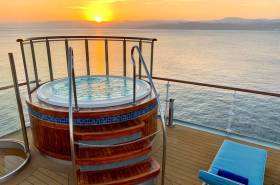
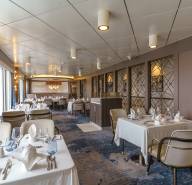
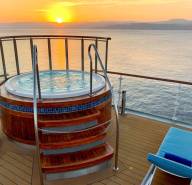
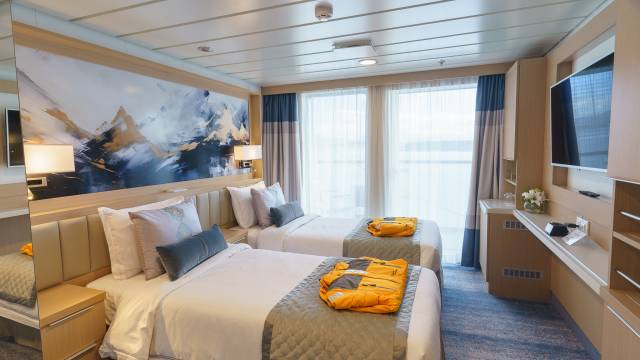
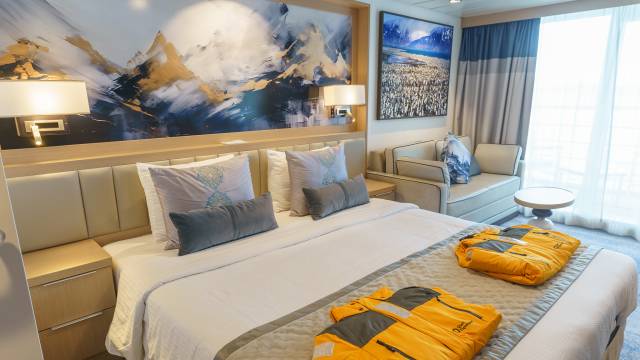
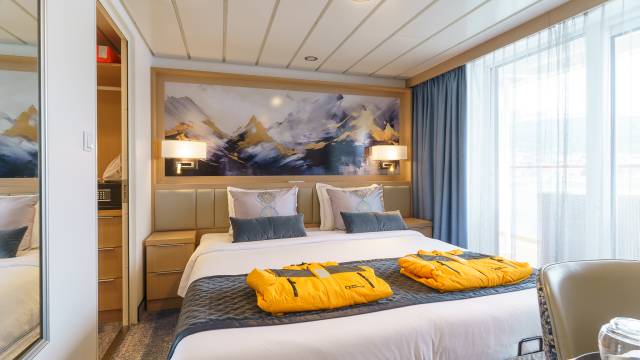
This is polar exploration at its finest. Our ships are intimate, luxurious floating hotels, packed with exciting experiences.


Enjoy panoramic views while you mingle in our comfy lounges, or head outside and chat with fellow adventurers on the wraparound deck. Our social spaces foster connections & shared experiences.

Engage with world-class experts in our auditorium. Presentations cover wildlife, history, marine biology, ecology, & geology, to enhance your polar knowledge & excitement for exploration.

Enjoy onboard amenities, attend lectures, or watch for wildlife from our observation decks. Sea days offer a perfect blend of education, relaxation, and anticipation.

Find tranquility in our well-stocked library, perfect for reading or quiet contemplation. The glass-domed Observation Lounge offers a peaceful retreat to reflect & enjoy awe-inspiring polar views.

Prepare for off-ship excursions in our spacious mudroom. Kayak, paddleboard, or take a plunge in polar waters. Stay active onboard with our gym, outdoor track, and pool facilities.


Know Before You Go
For your personal safety—and to ensure you get the most enjoyment out of your polar adventure—please assess your mobility and medical requirements before booking. It is essential that guests have a high level of mobility to get in and out of Zodiac boats, and for off-ship activities such as hiking on uneven terrain. Our destinations are remote. Apart from our basic ship infirmary, it could take up to 72 hours to reach adequate medical facilities. For more details to help you assess your mobility and medical requirements before booking your voyage, please review Health & Safety.
Some of our expeditions have included transfers and these will be detailed in your Invoice and Trip Brochure.
Please note that if you have an airport transfer included in your trip, it is only available if you arrive on Day 1 of the itinerary. Please ensure your flight information on your Passenger Forms is up to date so our ground crew know when to expect you. There will be someone with a sign in Arrivals waiting for you. Please look for them and they will direct you to our group shuttle.
If you do not have included transfers, or you are arriving before Day 1, you will need to make your own way to the hotel. Most airports we travel in and out of have good taxi ranks in the Arrivals area, or you can often prebook a transfer online.
Packing is an exciting part of the trip for many of us. You will find a handy packing list towards the end of your Trip Brochure. You will have received a copy of this when you first booked. We also have two excellent videos, which you can check out here: What to Pack
Our Protection Promise allows you to make a purchase decision that will leave you worry-free in the event your plans change down the road. Please review details for each term in our Quark Expeditions Protection Promise.
Whether you are thinking of an expedition, or you’ve booked the trip of a lifetime with Quark Expeditions, review all our FAQs for comprehensive tips to help you prepare for the Polar Regions and how to make the most out of your voyage with the most experienced expedition team in the industry. If your specific question isn’t covered below, please reach out to your Polar Travel Advisor or helpful Client Experience Team at guest@quarkexpeditions.com.